A Short guide to what to expect from your Security 'Expert'.
What knowledge and experience constitutes the title of ‘specialist’ in Security , Crime or Loss Prevention ?
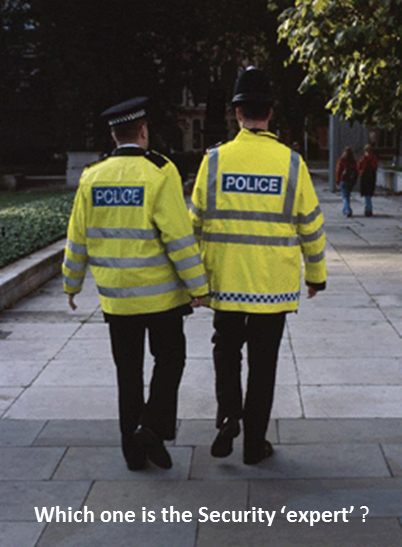
It is my personal and professional opinion, based on 26 years as a Police Officer in London and after 5 years as an independent consultant, that the true level of knowledge required to be a Security Consultant or Loss Prevention expert is often underestimated and this applies equally to those who think that Police = Security ‘Expert’.
To demonstrate, in the following section I have highlighted just some areas where I was required to provide expert advice while working in the role of a CPO and later as a specialist Crime Prevention Design Advisor [CPDA] in London.
Burglary and Theft Reduction for Commercial Premises
As with the residential properties but with a much greater emphasis placed upon physical security such as alarms, access control systems including biometrics, fencing , energy efficient security lighting , the effective use of CCTV. The consultants knowledge, training and experience should also include understanding the importance of effective security management systems , a thorough awareness of behavioural safety and security issues for management and staff.
Expert knowledge, training and experience in Loss Prevention, Arson Prevention, Business Continuity , Thefts by Employees, conflict management and preventing Shoplifting opportunities are other areas where specialist knowledge is required in order to provide businesses with clear guidelines to reduce the risks from crime.
Additional Requirements: - A clear understanding of how and why criminals target individual buildings or businesses is essential when providing advice as to how to avoid becoming a victim.
A clear understanding of the current law in relation to the right to detain a suspect [citizen's arrest] prior to the police attending - is especially relevant when advising shops and retail businesses.

Many organisations employ a Security Consultant or Loss Prevention Manager based on a common misconception that a former 'senior' police officer will have a greater knowledge and understanding of 'security' issues for businesses than those of less junior ranks.
In reality the role of security 'specialist' for residential properties and commercial businesses in the police service is that of the Crime Prevention Officer or CPO and the associated posts are regularly filled by officers in the years before their retirement. In recent times however the role has been increasingly favoured by officers looking at a more effective and sustainable way to reduce crime than chasing around with sirens wailing and blue lights flashing.
Specialist training in crime prevention theory and best practice provides the CPO with a very detailed knowledge and understanding of not only physical security but also criminal psychology, building design and how to design effective security systems and unlike many security consultants a trained CPO will not turn to CCTV or Security Guards as a panacea for all crime prevention.
Before you decide on employing a Security 'expert' please read on.....
Burglary Reduction and Security for Houses and other Residential Accommodation
The advice should encompass reducing the likelihood of offences of burglary, theft and damage and include a wide ranging knowledge of the latests security products as well as a comprehensive understanding of door and window security , property marking schemes and initiatives for deterring bogus callers.
Additional Requirement: - A clear understanding of how and where criminals who commit these crimes operate and a good knowledge of local crime trends are essential when providing advice as to how to avoid becoming a victim.
Personal Safety
This role should include providing advice to reduce the risk of being robbed or assaulted. Additional areas covered should include advice on the safe use of public transport and cycling or behaviour to avoid when walking around any town or city. Understanding how to 'appear' less like a victim is often key to reducing the chance of being targeted. The advice should extend to Staff in a commercial business and include staff car parking , cash-in-transit , banking routines and the risks associated with lone working, cascade systems and relevant Health and Safety law.
Additional Requirement: - A good knowledge and understanding of how, where and why criminals commit these offences is also essential when providing advice as to how to avoid becoming a victim.
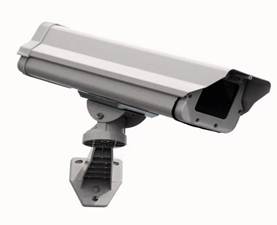
A Professional Consultant will be able to explain the limitations of CCTV as a deterrent.
Those who understand criminals will also be able to explain why CCTV is so often ineffective.
Those who are trying to sell you
a CCTV system will swear by it !
You decide.....
We hope this additional information will help you choose the expert that you and your business deserve
Crime Prevention and Safety Consultants

Honouring Our Commitments with Integrity
Tel: 0845 644 0168
Honora occur cum integritate
The Role of a Crime Prevention Design Advisor
A Crime Prevention Design Advisor [CPDA] also known as an Architectural Liaison Officer [ALO] in some police forces, is a specialist crime prevention officer, trained to ‘design out crime’ and provide advice for other built environment professionals.
In addition to a sound knowledge of physical security measures the role requires the advisor to provide advice on creating defensible space, effective access control, understanding crime and movement generators, maximising natural surveillance , security and street lighting, all of which can contribute significantly to a reduction in crime and disorder. The CPDA will have already worked as a Crime Prevention Officer and then have undertaken additional extensive training in Crime Prevention Through Environmental Design [CPTED].
Additional Requirement:- The role of a CPDA requires an ability to ‘design out’ opportunities for criminals to commit crime in the built environment and to create safe sustainable communities where people want to live, work and visit.
A CPDA’s work is carried out at various stages of the planning process and is most commonly achieved by working in partnership with:- local planning authorities, architects, developers, street lighting engineers, arborculturalists, landscapers , neighbourhood policing teams, community safety partnerships and residents groups.



Member of the ICA